AI makes creative work faster. That doesn’t automatically make it more creative. There was a moment when AI-generated content felt instantly impressive.
- A full article in seconds.
- Twenty headline options before your coffee was ready.
- A campaign concept, caption, moodboard direction, email subject line, video script, and probably a motivational quote you never asked for.
Very efficient. Very futuristic.
And now? A lot of it is starting to feel strangely familiar.
- The same polished phrases.
- The same “bold, innovative, game-changing” language.
- The same visual styles.
- The same perfectly structured LinkedIn post ending with a question.
You’ve seen it. Probably several times today.
That doesn’t mean AI is bad for creativity. Quite the opposite. Neural networks can make life dramatically easier for freelancers, marketers, designers, writers, and small teams. The problem starts when we confuse faster output with better thinking.
AI didn’t kill creativity. It made the average easier.
This is probably the biggest shift. Before AI, creating something mediocre still required some effort. You had to write the mediocre headline yourself. Now you can generate 30 of them before breakfast.
AI has lowered the effort required to produce content, and that’s useful. But it has also lowered the effort required to produce a lot of very similar content.
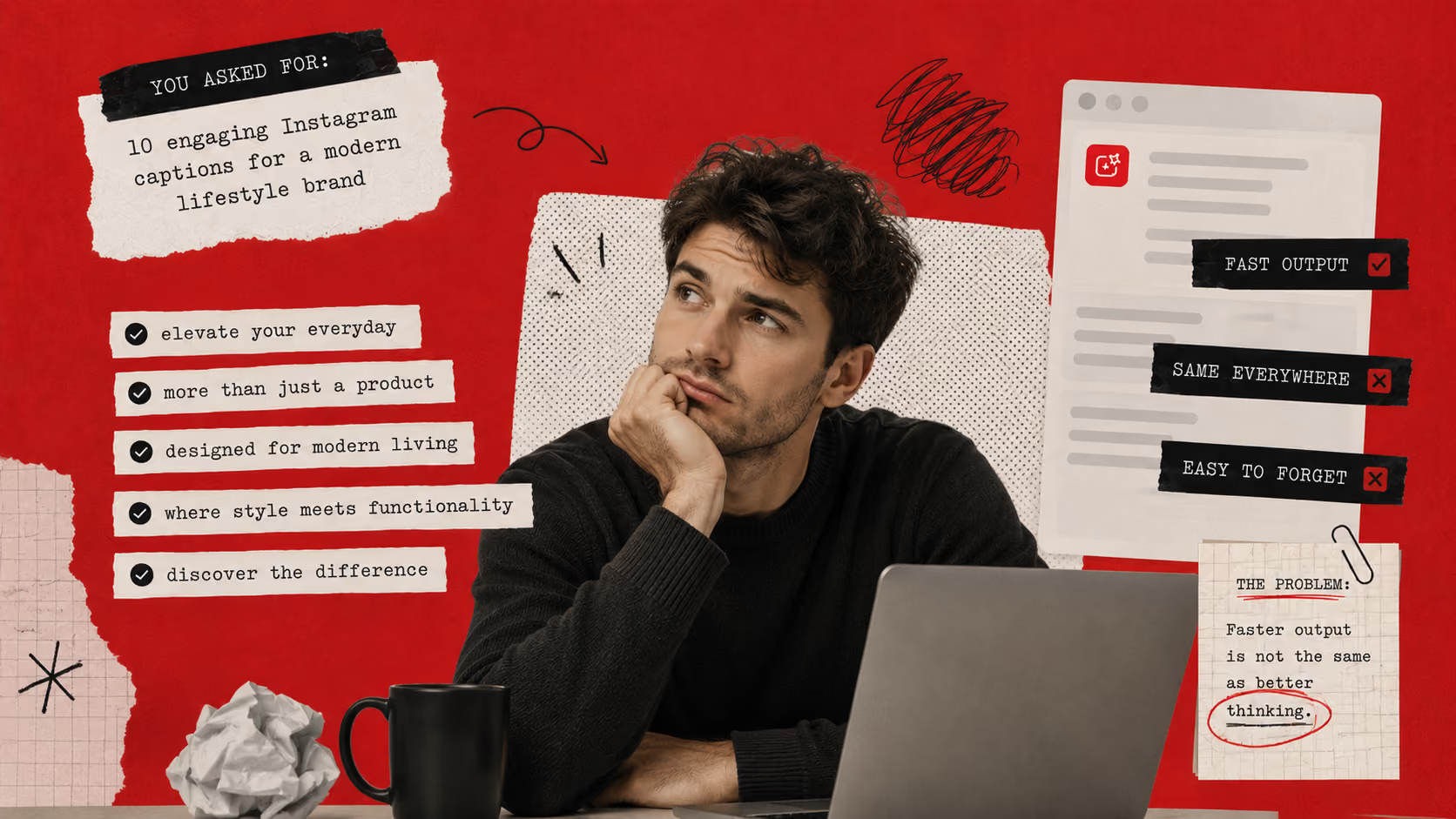
Ask a model for: “10 engaging Instagram captions for a modern lifestyle brand” and chances are you’ll get some combination of:
- elevate your everyday
- more than just a product
- designed for modern living
- where style meets functionality
- discover the difference
Nothing technically wrong with any of it. That’s almost the problem. It’s perfectly acceptable. And perfectly forgettable.
Why does everything start sounding the same?
AI models learn patterns. That is exactly what makes them useful. They’ve seen huge amounts of writing, structure, phrasing, visual references, marketing language and creative formats. So when you ask for something without much context, they naturally move toward patterns that are statistically likely to work. Which often means they move toward the middle. Safe. Clear. Familiar.
The creative equivalent of choosing the restaurant everyone says is “pretty good.” And when thousands of people are using similar tools with similar prompts, you get the same problem at scale. Everyone asks:
- “Make this more engaging.”
- “Make it sound premium.”
- “Make it creative.”
- “Create a modern brand identity.”
And AI politely responds with approximately the same internet.
But this is where AI becomes genuinely useful
The boring part of the AI conversation is whether it will “replace creatives.” A much more useful question is: What parts of creative work shouldn’t require so much time in the first place? This is where AI is already changing the work of freelancers and marketers in a very practical way.
Research that used to take hours can become a starting point in minutes. You can use AI to organize messy notes from a client call, summarize audience research, compare positioning, generate first-round content directions, build variations of a campaign message, restructure a long document, brainstorm questions for an interview, or turn one idea into ten different formats.
- For a freelancer working alone, that can feel like suddenly having an extra pair of hands.
- For a small marketing team, it can remove a surprising amount of repetitive work.
- And for agencies, it means more time can go into the parts clients are actually paying for: thinking, judgment, direction, refinement, and execution.
Nobody dreams of becoming a creative director so they can manually resize the same sentence into 17 variations. If AI wants that job, please.

The best use of AI often happens before the final output
This is something we think gets overlooked. People tend to judge AI by asking it to create the final thing.:
- “Write my article.”
- “Create my campaign.”
- “Design my ad.”
But some of its most useful creative applications happen much earlier. For example, you can give AI a rough idea and ask it to challenge it.
- What’s predictable here?
- What audience objection are we missing?
- What are five completely different ways to frame this?
- What would make this concept feel less like every competitor?
- What questions should we answer before we start designing?
That’s a much more interesting relationship with AI.
Instead of: “Do the thinking for me.” It becomes: “Help me think further.” Big difference.
AI is great at options. Humans are still better at knowing which option matters. This is where taste comes in. And taste is difficult to automate.
- AI can give you 50 headlines. That doesn’t mean headline number 37 is good.
- It can create five visual directions. That doesn’t mean any of them fit the brand.
- It can generate a perfectly structured marketing strategy. That doesn’t mean the strategy understands the politics inside the client’s company, what the founder actually wants, what customers are tired of seeing, or why a slightly strange idea might be exactly the right one.
Creative work is full of decisions that are hard to put into a prompt. You look at something and think:
- Too polished.
- Too obvious.
- This feels like them.
- This technically shouldn’t work, but it does.
That judgment comes from experience, context, culture, references, conversations, mistakes, intuition, and being a human who has spent too much time looking at advertising.
AI can support that.
It can’t magically give you taste because you typed “make it edgy.”

Freelancers might benefit from AI the most
For freelancers, AI can remove a lot of the invisible work surrounding the actual craft.
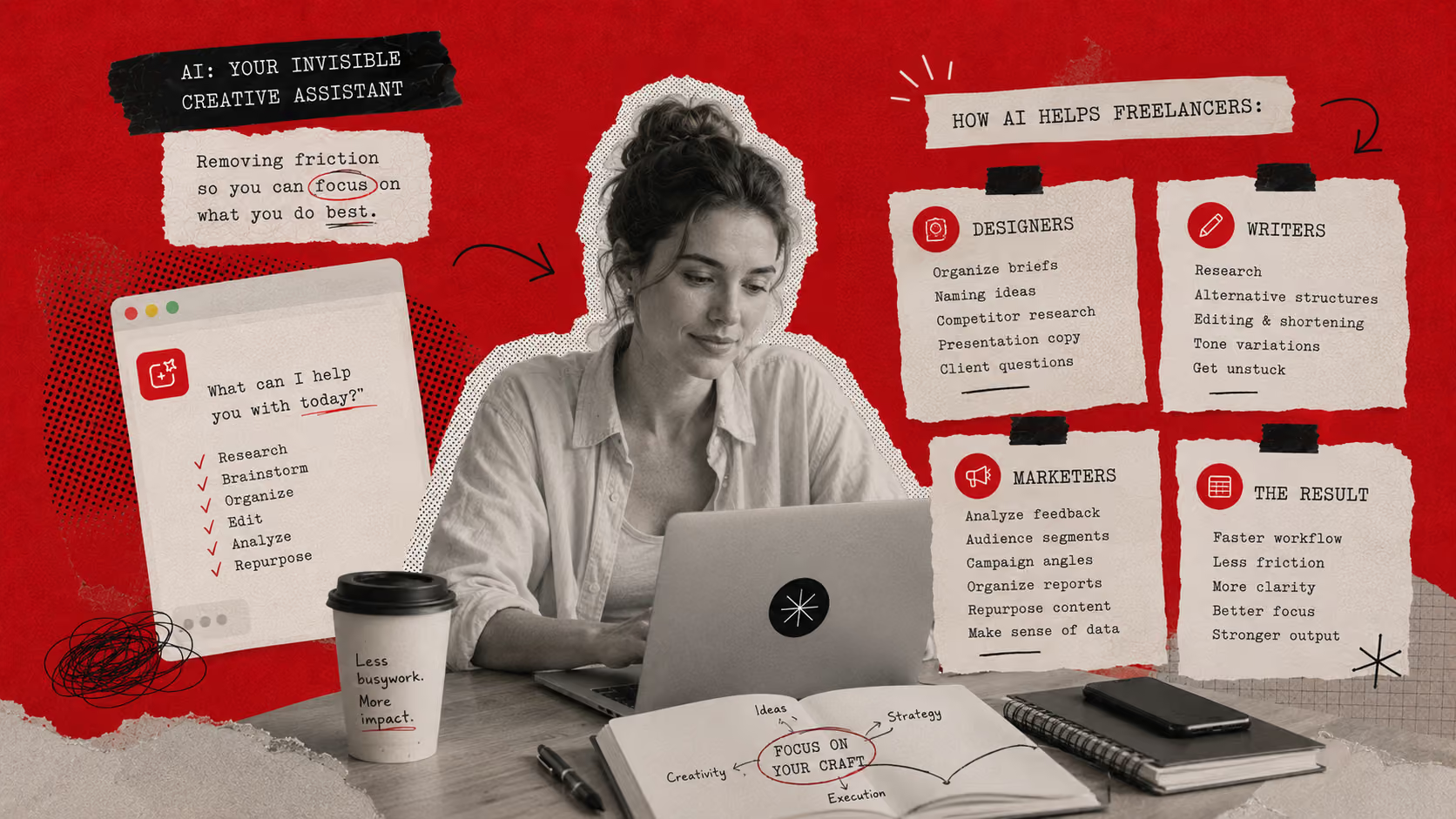
- Imagine you’re a designer. You can use it to help organize a brief, develop naming territories, research competitors, prepare presentation copy, or generate questions before a client meeting.
- If you’re a writer, it can help with research, alternative structures, editing, shortening, tone variations, and getting unstuck when your brain has decided it is done for the day.
- If you’re a marketer, it can help analyze customer feedback, build rough audience segments, brainstorm campaign angles, organize reports, repurpose content, or make sense of a spreadsheet nobody wants to look at.
None of those uses need to replace the person doing the work. They can simply remove some friction around it. Which is arguably much more valuable.
The danger is when AI becomes the creative director
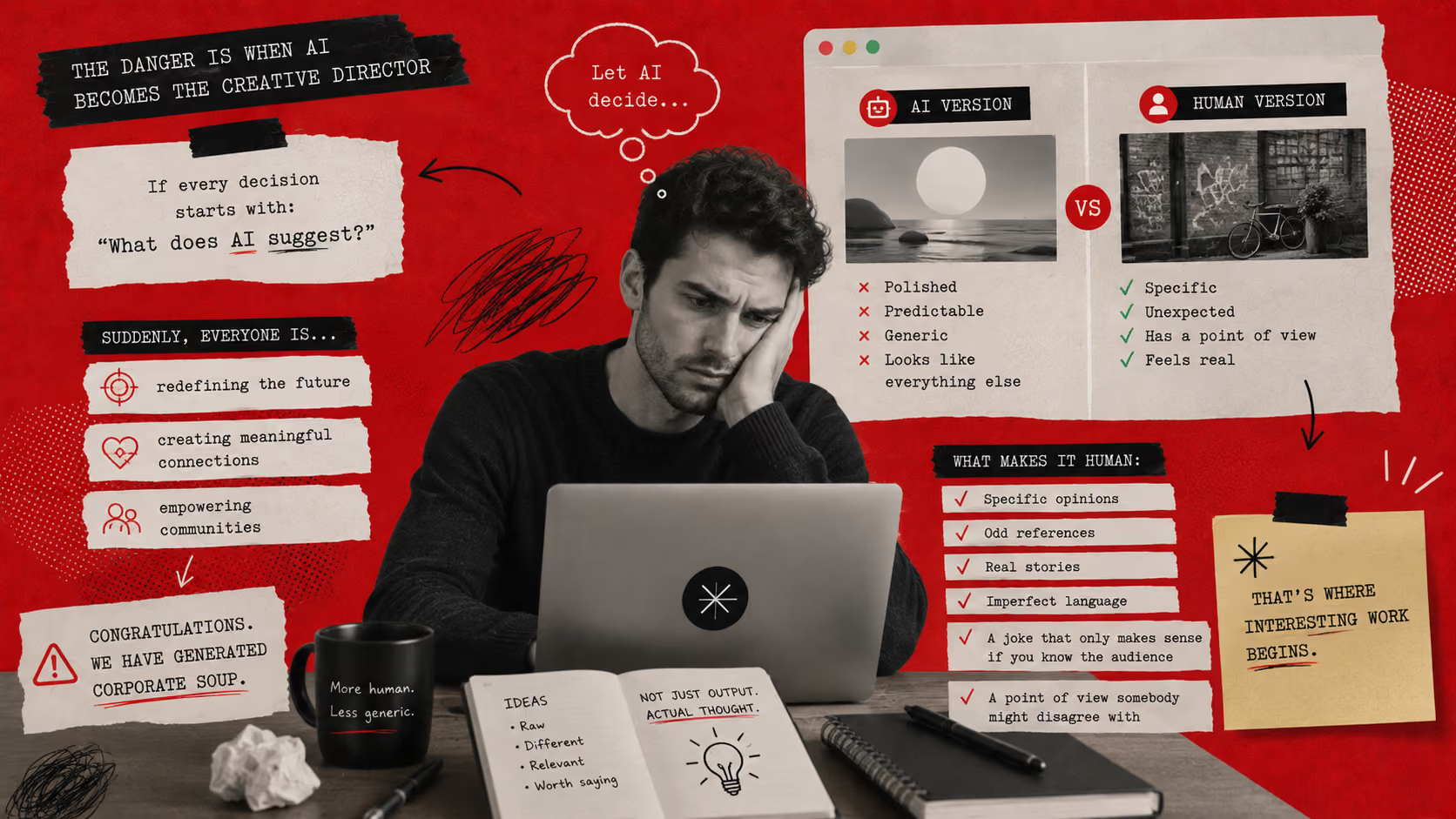
Here’s where things get less exciting. If every decision starts with: “What does AI suggest?” you slowly stop bringing much of yourself into the work. And that’s how brands begin sounding interchangeable.
- A brand voice becomes whatever the model thinks a brand voice sounds like.
- A campaign becomes whatever the model thinks a campaign looks like.
- A founder’s opinion gets polished until there is almost no founder left in it.
Suddenly everyone is “redefining the future,” “creating meaningful connections,” and “empowering communities.”
Congratulations. We have generated corporate soup.
The funny thing is that as AI becomes more common, the things that feel unmistakably human may become more valuable. Specific opinions. Odd references. Real stories. Imperfect language.
- A joke that only makes sense if you actually know the audience.
- A photograph that wasn’t generated to look like every other photograph.
- A point of view somebody might disagree with.
That’s usually where interesting work begins.
Prompting matters, but context matters more
There are endless posts about the “perfect AI prompt.” And yes, better instructions usually produce better results. But no magic collection of prompt formulas will replace having something interesting to say.
If your prompt is: “Write a creative marketing campaign for a coffee shop.” AI has to invent almost everything.
If instead you tell it: The coffee shop is run by two sisters. It’s underneath an office tower. Most customers arrive between 7:45 and 9:10. Regulars joke that the barista knows their order before they speak. The brand hates coffee snobbery and wants the campaign to feel more like your neighbourhood friend than a luxury roaster. Now we have something.
The difference isn’t really the AI. The difference is specificity.
Good input still matters. Maybe more than ever.
So, should creatives use AI?
Yes. We do.
Ignoring it completely would be a little like a designer in 2015 announcing they’ve decided computers are a trend.
But there’s a difference between using AI and letting AI define the work.
- Use it to get through blank-page moments.
- Use it for research.
- Use it to explore.
- Use it to organize.
- Use it to create variations.
- Use it to automate the repetitive parts nobody will miss.
Then bring the human part back in.
- Edit aggressively.
- Delete the obvious ideas.
- Add context.
- Make it more specific.
- Make it slightly uncomfortable.
- Ask whether you would actually stop scrolling for it.
And if the answer is no, generating 20 more versions probably isn’t the solution.

The creative advantage is changing
For a long time, being able to produce something was the advantage. Now production is getting cheaper and faster. So the advantage shifts toward knowing:
- What should be made.
- What deserves attention.
- What feels fresh.
- What fits the moment.
- What belongs to this brand and nobody else.
AI can help us get to those decisions faster. But somebody still has to make them. And for now, that someone should probably have a pulse.