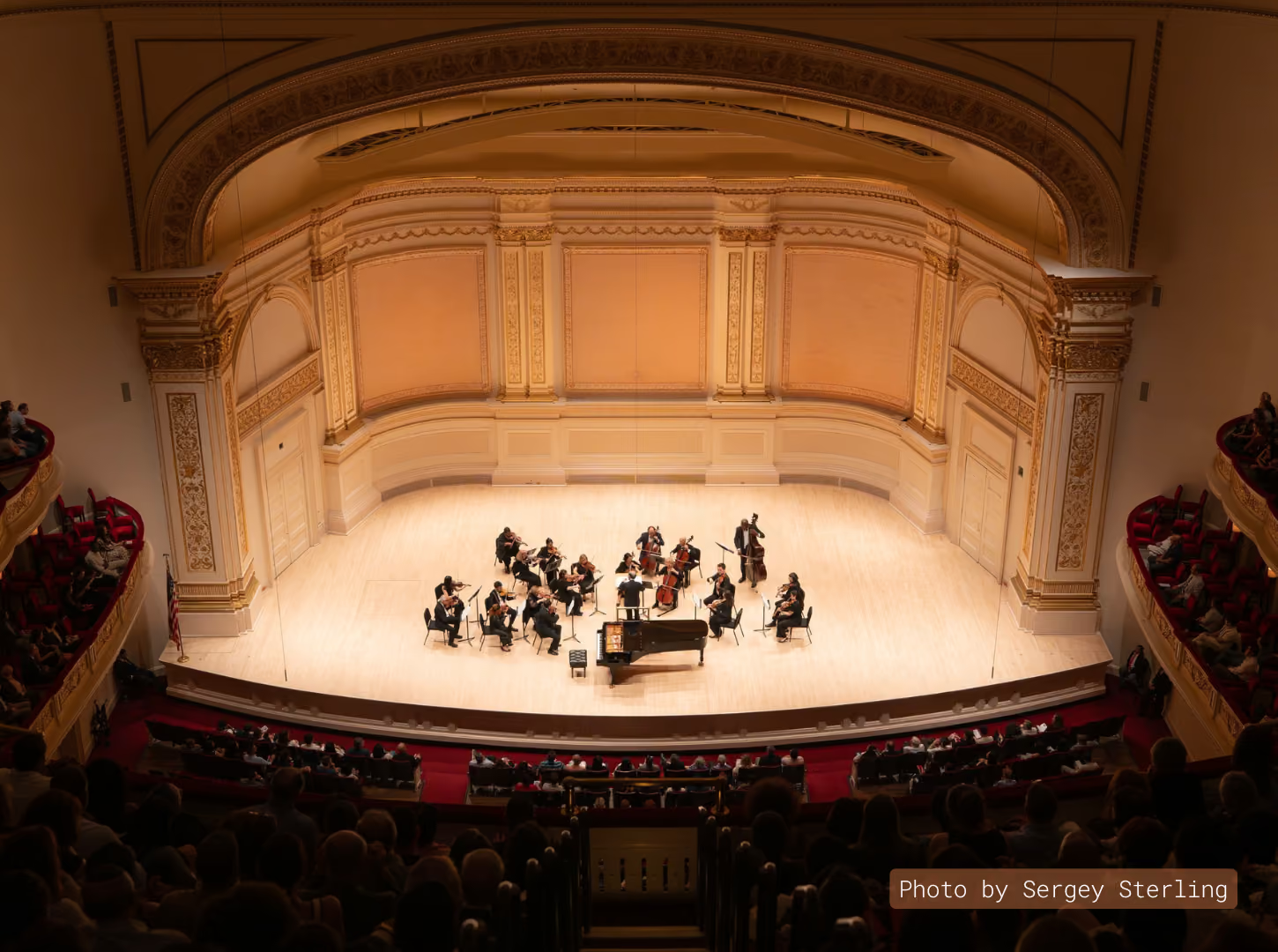
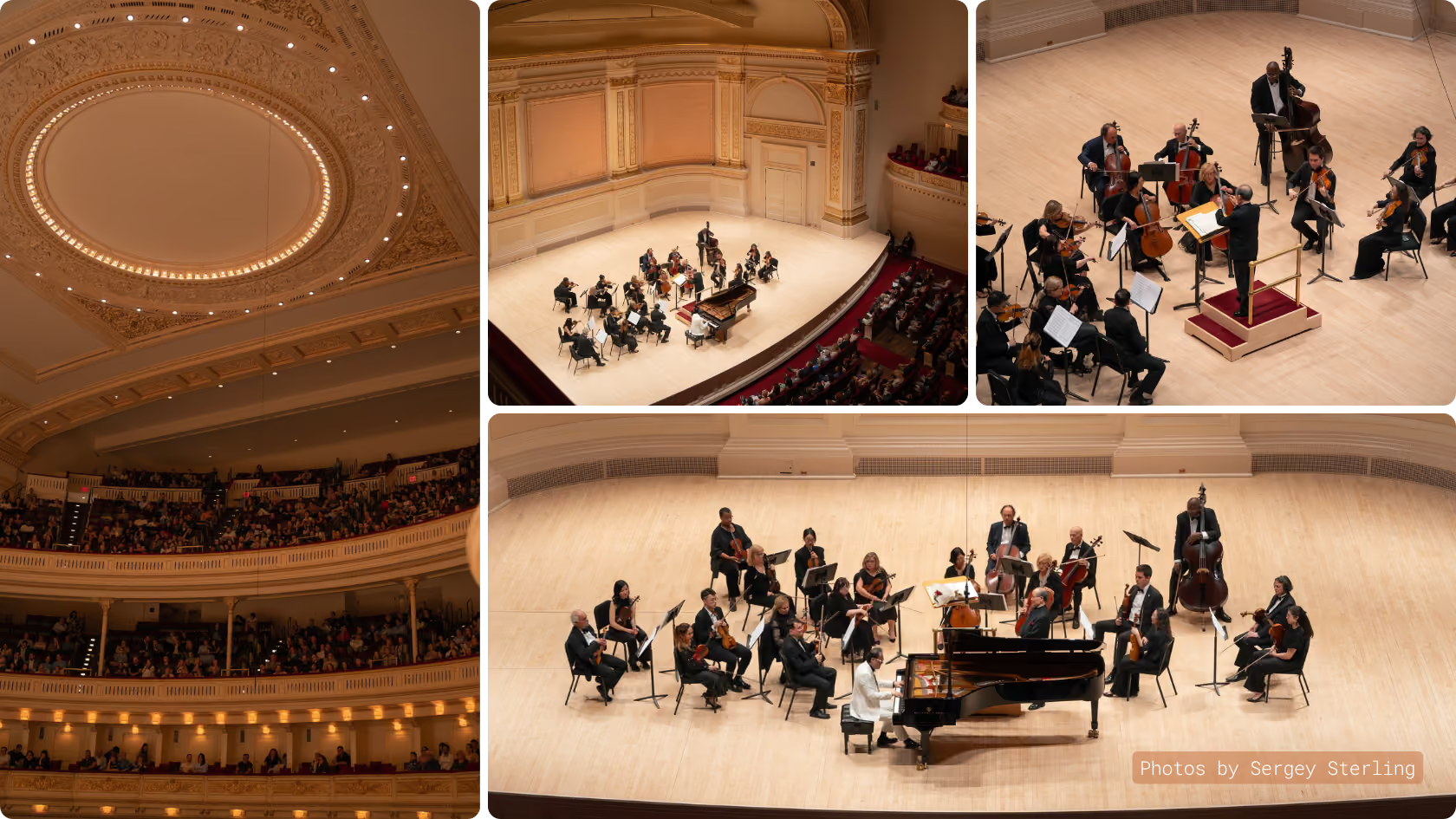
In June, the Vienna Royal Orchestra made its New York debut at Carnegie Hall, celebrating the 270th anniversary of Mozart’s birth.
Mozart, admittedly, has been doing pretty well without a marketing agency for the last few centuries. The actual challenge was introducing the Vienna Royal Orchestra to New York.
We’ve already broken down the strategy, campaign, creative and results in our full Viva Mozart 270 case study, so we won’t turn this into another marketing report. Instead, here are a few things the project left us thinking about.
You’re rarely selling the thing itself
Technically, we were marketing a classical music concert. But people don’t buy tickets because their calendar desperately needs another two-hour appointment. They buy the evening around it.
- Carnegie Hall.
- Mozart.
- Getting dressed up.
- Bringing someone with you.
- Hearing music live instead of through headphones.
- Sitting in a room where hundreds of people have chosen to experience the same thing at the same time.
That’s the actual product. And the same idea applies almost everywhere.
- A restaurant isn’t just selling food.
- A hotel isn’t just selling a bed.
- A fashion brand isn’t just selling fabric.
A useful question for almost any campaign is:
What does someone imagine happening after they say yes?
That is often where the interesting marketing begins.
Familiar + new works surprisingly well
Mozart needs no introduction. The Vienna Royal Orchestra, making its New York debut, did. That combination gave us something useful: a familiar reference point attached to something people could discover. We think that balance matters more than it gets credit for.
- Too familiar, and people barely notice it.
- Too unfamiliar, and half your campaign becomes an explanation.
But something recognizable can give people a reason to pay attention to something new. In this case: Mozart. Carnegie Hall. A Vienna Royal Orchestra performing in New York for the first time. There’s already a story there.
Prestige helps. It doesn’t do all the work.
Having Carnegie Hall in your campaign certainly helps. Unfortunately, Meta does not automatically give you a standing ovation. A famous venue, impressive product or established name creates credibility, but people still need a reason to stop and care.
We see this often with brands. Something feels incredibly obvious when you’ve been living inside the project for months, so you assume the audience will notice it immediately. Usually they won’t.
- If something matters, say it.
- If it matters a lot, say it more than once.
People are not studying your ad. They’re probably looking at it while waiting for coffee.
Eventually, the best metric is a room full of people
We love campaign data. Probably slightly too much. Clicks, conversions, creative tests, ROAS. Give us a dashboard and we’ll happily disappear for a while.
But live events have a nice way of putting those numbers back into perspective.
An impression becomes a click → A click becomes a ticket → Then somebody leaves home, walks into Carnegie Hall, finds their seat and becomes part of the actual experience → Suddenly, something you’ve been watching through Ads Manager for weeks is happening in front of you.
That might be one of our favourite things about event marketing. It feels very digital right up until the doors open. Then it’s just people.
For the numbers, strategy and full campaign breakdown, you can see the complete project case study here.

And Carnegie Hall wasn’t the finale
The New York debut is over, but Viva Mozart 270 keeps moving. This October, the Vienna Royal Orchestra heads to California:
- October 13, 2026 · Davies Symphony Hall, San Francisco
- October 15, 2026 · Cerritos Center for the Performing Arts, Los Angeles area
- October 19, 2026 · Jacobs Music Center, San Diego
And because writing an entire article about an orchestra without letting you hear the orchestra would be a little strange: Watch the Viva Mozart 270
Some projects end with a final report. This one apparently decided to go to California.
Photography featured in this article by Sergey Sterling and sourced from Tian Jiang’s official Facebook page.